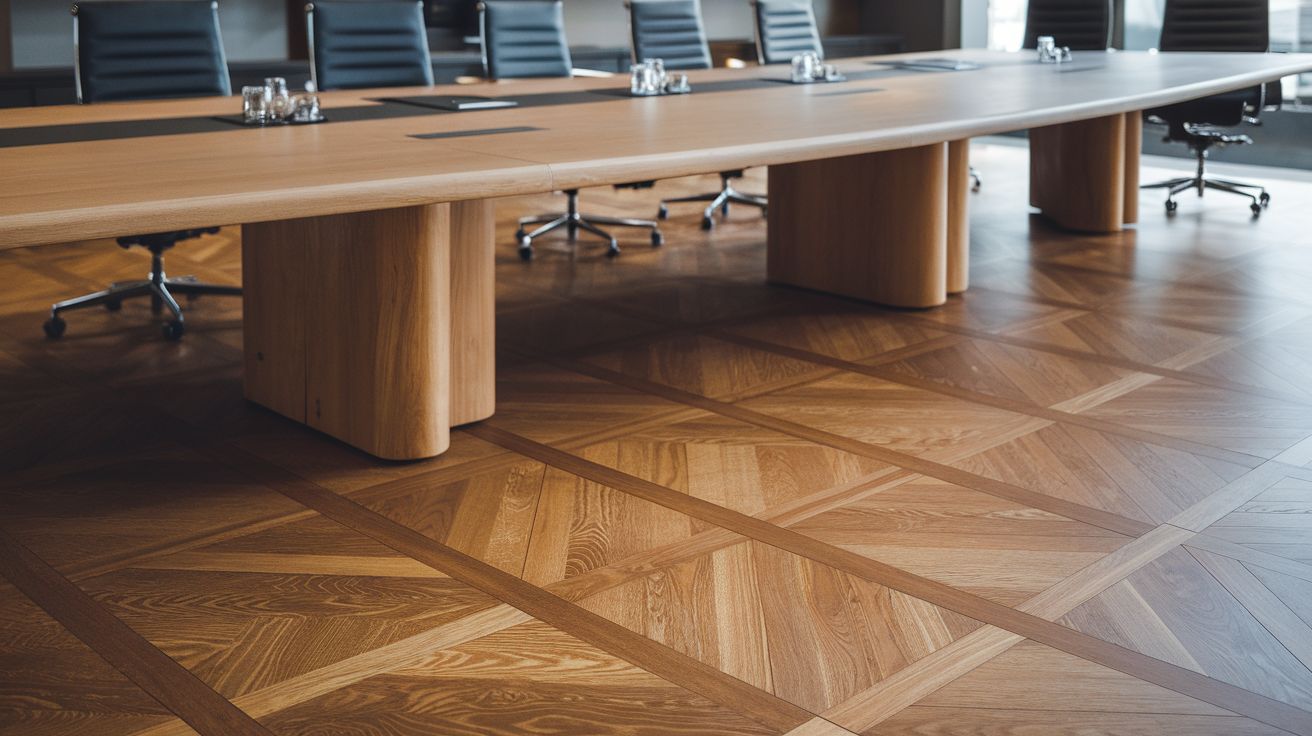



The Board of Directors of the European Parquet Federation, FEP, met in Brussels on 8 April 2026, and discussed, amongst others, the situation on the European parquet markets.
Across Europe, the parquet markets had shown slight positive signs at the beginning of the year, with moderate growth in private investments and in renovation and construction activities. However, the recent “Iranian crisis” has introduced a new layer of uncertainty, abruptly slowing or halting the emerging positive trend. Rising energy and transport costs, already high in several regions, are expected to increase further, putting additional pressure on production expenses. Inflation remains a major concern, further amplified by growing costs of raw materials such as wood. Distribution challenges and pressure on margins add to the strain felt across the supply chain.
While liquidity exists and investment potential is present, many projects are being recalculated or delayed to avoid rising costs, which could negatively impact parquet consumption.
At the same time, certain factors may offer limited compensatory effects to the sector, such as a renewed interest in energy‑efficient buildings and, especially, a potential slowdown in imports from Asia - including Chinese imports at lower prices compared to the Anti-Dumping on Multilayer Wood Flooring pre-Investigation period, and parquet products from other Asian countries that until recently were not significant suppliers to the EU.
Overall, the European parquet market is currently characterized by caution, reduced visibility, and a generally flattish outlook, as economic and geopolitical uncertainties overshadow earlier signs of recovery.
As usual, the results show variations from country to country. A brief per country recap is provided in the full PR here.